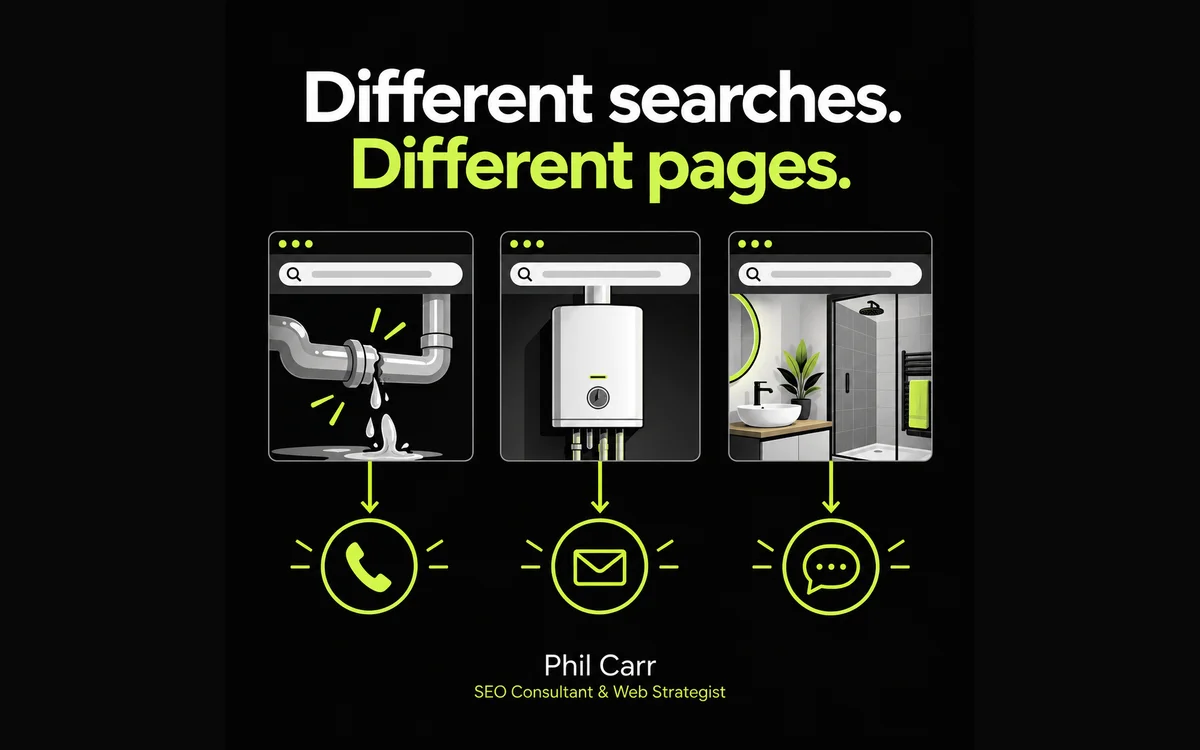
Carpentry covers work that has almost nothing in common commercially. A kitchen fitted, a staircase made to measure, a run of wardrobes built in, a door rehung, second-fix on a new build. The customers are different, the budgets are different, and a single "carpentry services" page asks all of them to work out for themselves whether you are the right person.
Separate the work that pays from the work that fills the diary
The first job is deciding which enquiries you actually want more of, then giving those their own page. Bespoke joinery and fitted furniture are considered purchases: people search for weeks, compare finishes and timber, and want to see what you have made. Repairs and second-fix are quick decisions where availability and a phone number matter more than a gallery.
- Bespoke joinery — staircases, doors, sash windows, one-off furniture. Show the timber, the process, the lead time and roughly how a quote is arrived at.
- Fitted furniture — wardrobes, alcove units, home offices, media walls. Photographs of finished installs in real rooms do most of the persuading.
- Kitchen fitting — often searched separately from carpentry, and often with a supplier name attached.
- Second-fix and site work — skirting, architrave, doors and floors for builders and developers. This audience wants availability, rates and reliability, not a gallery.
- Repairs — sticking doors, rotten frames, broken sash cords. Quick, local, and usually the first job a new customer gives you.
Photographs are the product
Joinery is bought with the eyes. Every finished job is worth photographing properly — wide shot, detail of the joint or the finish, and ideally a before. Name the timber and the finish in the caption, because that is what people search for, and put the images on the page they belong to rather than in one large gallery where nothing is findable.
Local visibility for carpentry searches
Most carpentry searches carry a place name or are made on a phone with location switched on, so the Google Business Profile does a lot of work: the right primary category, the services listed, recent photographs, and honest opening hours. Reviews that mention the type of work — "fitted our wardrobes", "made a new staircase" — are worth more than a general five stars, so it is fair to ask customers to say what the job was.
The rest is the website doing its share: a clear service area, a sensible way to get in touch, and an explanation of what happens between the enquiry and the quote. There is more on how trade searches behave on the trades SEO page, and on how the same principles apply to related trades on the builders and contractors pages.
Frequently asked questions
Usually not. Bespoke joinery is a considered purchase where people compare craftsmanship over weeks; general carpentry and repairs are quick, local decisions. Separate pages let each one answer its own question, and they stop the cheaper work drowning out the jobs you want.
Enough to show the range of work you want more of — a handful of properly photographed jobs beats dozens of phone snaps. What matters is that each service page has images of that service, with captions naming the timber, finish and location.
No. One honest coverage statement, plus a Google Business Profile with the right service area, does more than a set of near-identical town pages, which Google treats as thin content.
That is a different page and a different tone: availability, rates, the size of jobs you take and the trades you work alongside. Homeowner pages sell the finish; trade pages sell reliability.
Local map visibility can move within weeks once the profile and service pages are in order. Competitive terms such as bespoke joinery in a city usually take months, because the pages have to earn their position against established firms.