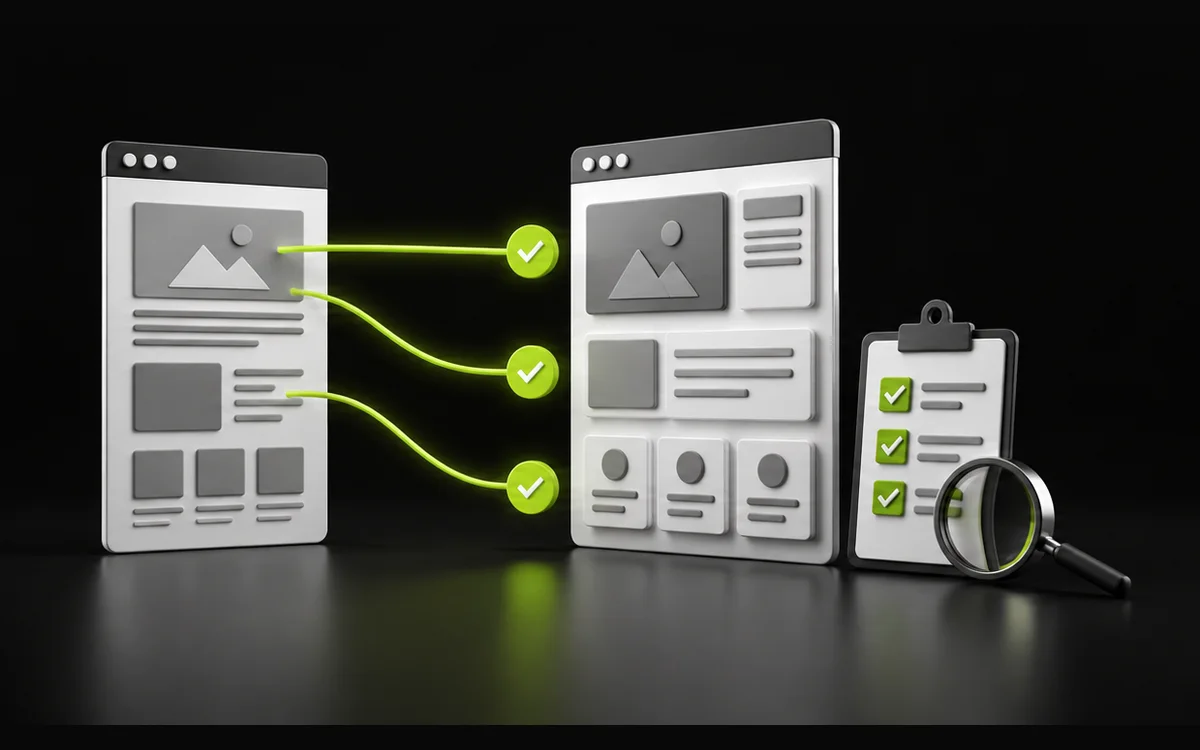
I provide freelance website design in Barnsley, covering page planning, design, development and handover. Projects can include business websites, WordPress websites, Shopify stores and changes to an existing site. The brief identifies the pages, content, functionality and search foundations involved.
You discuss the project directly with me. We agree what needs changing, who supplies the content and which parts of the website need review before launch.
Decide what visitors need to find and do
The starting point is the task: reading about a service, requesting a quote, booking a course or placing an order. We map the information, navigation and forms needed for that task.
An existing site may need changes to a few pages rather than a complete rebuild. The initial review considers both routes.
- Page planning and visitor journeys
- Responsive layouts for mobile and desktop
- SEO-ready structure and content hierarchy
- Loading behaviour, keyboard access and form checks
Examples of website work
These case studies describe the page structure and functionality of two completed projects.
Sentinel Door Systems: industrial products and service enquiries
The Sentinel Door Systems project documents a website rebuild with product, installation, maintenance and emergency-support routes. The case study describes the navigation and enquiry paths delivered for this industrial-door business.
Oracle Training Consultants: WordPress and course booking
The Oracle Training Consultants project documents a WordPress and WooCommerce build with learner, parent and employer information, alongside online short-course booking.
What is included in the web design service
The proposal identifies the planning, design, development and launch work for your project. It records the page list, functionality and responsibilities rather than assuming every build needs the same features.

Strategic planning
I map the pages your customers need and the questions each one should answer before design begins. We agree the main services, supporting evidence and enquiry routes, then organise navigation around them. This gives the build a clear purpose and helps identify missing copy, photography or case studies early.

Responsive layouts
Visitors should be able to read your offer, compare services and contact you comfortably on a phone as well as a desktop. I plan layouts around real content, then check navigation, forms, image crops and spacing at different screen sizes. Longer pages remain easy to scan without hiding useful detail.
Search foundations
The build scope can include headings, internal links, URL structure, page metadata and image preparation. For a replacement website, existing URLs and content are reviewed before deciding what to retain or redirect. Ongoing SEO research and campaigns are separate from these launch tasks.
Content, images and review responsibilities
Before design starts, we list the copy, photographs, logos, product details and existing pages required. The proposal identifies what you supply and any writing, editing, image sourcing or content migration included in the work. Existing content is reviewed before reuse; permission to use photographs and other supplied assets also needs confirming.
We agree who approves the content and design, which review stages are included and how requests outside the agreed scope are handled. Additional pages, integrations or revision rounds are discussed before work proceeds. The website project preparation checklist sets out the information to gather. Do not send passwords through an enquiry form.
Website types and functionality
The right build depends on what the website needs to achieve and how your team will manage it. I recommend the simplest platform that can support the commercial goal, content plan, and future changes without creating avoidable maintenance.
Business and lead-generation websites
Brochure and service websites for consultants, professional services, trades, manufacturers, and other businesses that need clearer enquiries, quote requests, calls, or bookings.
Trades, manufacturers and professional-service firms may need different routes for product research, planned work and urgent enquiries. The page plan records those distinctions rather than giving every service one generic form.
WordPress and content-managed websites
WordPress website design and other content-managed builds with an editing experience your team can use. The handover can include CMS training so routine page, image, and content updates do not depend on a developer.
Where selling or booking is part of the brief, WooCommerce on WordPress is an option to assess alongside the existing content and operational requirements.
Ecommerce website design
An online store needs to make product discovery, comparison and checkout straightforward. I plan collections, product details, delivery information and payment journeys around your range, then test the buying process. Shopify, WooCommerce or a bespoke build can be considered depending on your catalogue, integrations and how you want to manage the business.
Landing pages and campaign builds
A campaign landing page gives a visitor one relevant offer and a clear next step. I bring together the message, supporting proof and form or purchase journey, then check the page on mobile. Tracking is planned alongside the design so you can assess whether the campaign is producing useful enquiries or sales.
Booking systems and integrations
Online booking, payment gateways, email marketing, CRM, analytics, and third-party integrations can be included where they remove manual work or improve the customer journey. More complex workflows can be scoped through bespoke app development.
Choosing a website platform
- WordPress: assess it for service pages, articles and content that your team needs to edit.
- WordPress with WooCommerce: assess it when the same site also needs product, order or course-booking functionality.
- Shopify: assess it for a store managed through Shopify, checking the theme, catalogue, apps and platform restrictions against the brief.
- Custom or static builds: assess them when the editing requirements or functionality call for another approach; handover and maintenance still need defining.
There is no platform choice implied by the size or location of your business. Start with the content, everyday tasks and required integrations. The WordPress, Shopify and WooCommerce guide explains the questions to compare.
From discovery to launch-ready delivery
The project schedule identifies when you review the page plan, designs and working build. Content delivery, feedback and third-party access are recorded as dependencies.
The stages below describe the work considered when agreeing that schedule.
Discovery
We discuss your customers, the services you want to promote and what the current website makes difficult. I review any existing content and search performance, then agree a page plan and the features required. You know what you need to supply before the design work starts.
Design & content
I develop the page layouts and messaging together so the design has room for the information customers actually need. You review the visual direction, key pages and calls to action before the full build. Feedback at this stage helps resolve unclear offers and missing evidence early.
Build & optimise
The agreed layouts become responsive pages with working navigation, forms and any scoped integrations. I check loading behaviour, keyboard access and content presentation across screen sizes. Existing URLs, metadata and redirects are reviewed as part of preparing the site for launch.
Launch & support
Before launch, I check the main customer journeys, links, forms and agreed tracking. We confirm domain and hosting arrangements, publish the site and review the live version. Handover explains how to manage routine changes, with further support available through an agreed maintenance or improvement plan.
What the finished website needs to do
Before design starts, we define the actions the website needs to support and the information a visitor needs before taking them. That becomes part of the review brief.
- Give each important page one clear job, such as generating a call, quote request, booking, or product enquiry.
- Make services, coverage, and suitability easy to understand without forcing visitors to hunt through the site.
- Put proof, useful detail, and calls to action in the places where a buyer is most likely to hesitate.
- Track form submissions and other meaningful actions so post-launch improvements can be based on evidence.
If search visibility is already a concern, a bespoke SEO website audit can establish what needs protecting before a redesign begins.
New website or focused redesign?
Not every underperforming site needs to be replaced. A focused redesign may be enough when the platform is sound but the navigation, page templates, mobile experience, or calls to action are weak. A rebuild is normally the better route when structural limitations make ordinary improvements slow, risky, or expensive.
The decision starts with four checks:
- Content and structure: can the current site support the service pages and user journeys the business now needs?
- Editing and ownership: can your team update essential content without depending on fragile workarounds?
- Performance and accessibility: which mobile, loading and accessibility checks does the existing theme or codebase need?
- Migration preparation: which URLs, analytics events, forms and integrations need a launch plan, and which current search visibility should be recorded and monitored?
The assessment records which changes belong in the existing site and which require a rebuild.
What is checked before launch
Launch preparation covers more than a final visual review. The release checklist includes responsive behaviour, forms, navigation, page metadata, canonical URLs, redirects, analytics, cookie controls, and the main conversion journeys. Existing URLs are mapped before a redesign so valuable pages are retained or redirected deliberately rather than disappearing at launch.
After launch, website management can cover agreed updates and content changes. The hosting scope identifies infrastructure, backup and monitoring responsibilities so the two services do not assume the same tasks.
Accessibility checks can cover heading order, keyboard navigation, visible focus, labels and error messages, contrast and text alternatives. The proposal identifies the pages and interactions to check. A specialist accessibility audit or formal conformance assessment needs a separate, explicit scope. For practical examples, see the mobile usability checklist and enquiry form checklist.
Ownership, training, and support after launch
The proposal sets out ownership and licensing arrangements, the platform, handover tasks and any ongoing responsibilities. Where a content management system is part of the build, I can provide practical training for the people who will update it.
You can choose a clean handover, a managed support arrangement, or continuing optimisation. Ongoing support can cover hosting, backups, security updates, performance monitoring, content changes, analytics checks, and new landing pages as the business grows.
Web design for Barnsley and South Yorkshire businesses
I am based in Barnsley and work with businesses across the borough, including the town centre, Wombwell, Hoyland, Penistone, Dodworth, Cudworth, Mapplewell, Goldthorpe, and the Dearne Valley. Projects can be delivered remotely, with local meetings where they help the brief, content, or handover. I also support businesses across Sheffield, Rotherham, Doncaster, Wakefield, and the wider UK.
Web design faqs
Common web design questions
What happens after you get in touch?
Send your existing website address, what needs changing and any content or functionality you already have in mind. The initial conversation covers the pages, platform, access and next steps. A written proposal then records the agreed scope, review stages and handover. There is no need to choose a platform before that conversation.